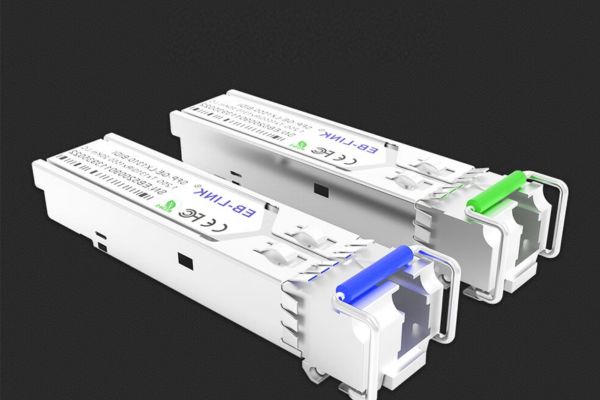
Understanding BiDi Optical Transceivers: Simplifying Network Connectivity with Cost‑Effective Innovation
In today’s fast‑evolving network environment, data centers, service providers, and enterprises are always seeking ways to increase bandwidth without raising costs or adding complexity. One of the most efficient technologies helping network engineers achieve this is the BiDi (Bidirectional) optical transceiver. BiDi transceivers are designed to transmit and receive data over a single strand of fiber, effectively doubling fiber capacity while keeping performance stable. Let’s take a closer look at how this technology works, why it matters, and where it fits in modern network design.
The Challenge of Conventional Optical Links
Traditional optical modules use duplex communication—one fiber sends data, and another receives it. This setup is reliable and simple to deploy, but it consumes twice the fiber count for every connection. As bandwidth demands surge due to streaming services, cloud computing, and growing enterprise connectivity needs, the cost of additional fiber infrastructure has become a major concern.
For example, expanding a 10‑gigabit network using standard duplex modules requires pulling extra fiber cable, re‑terminating connectors, and often running new physical routes. In dense metropolitan or data‑center environments, that’s not always possible—or economically viable. That’s where BiDi optics come into play.
What Makes BiDi Transceivers Different
The magic behind BiDi optical modules lies in their use of Wavelength Division Multiplexing (WDM). Each module uses a pair of wavelengths—one for transmitting and one for receiving—on the same piece of fiber. Think of it like two people speaking different “languages” on a single phone line: as long as they’re tuned to unique wavelengths, their signals don’t interfere.
A typical BiDi transceiver pair is configured so that one transceiver transmits at, say, 1270 nm and receives at 1330 nm, while the transceiver on the opposite end does the reverse. This setup allows for full‑duplex communication through just one fiber core.
Besides the optics themselves, nothing else changes. The connectors, transceiver slots, and network devices remain the same as with duplex modules. That backward compatibility is a key selling point for organizations looking to upgrade performance without replacing existing infrastructure.
The Advantages of BiDi Transceiver Deployment
The appeal of BiDi modules goes far beyond the clever physics. They offer tangible operational and financial benefits:
- Reduced fiber requirements – Since BiDi optics cut fiber usage in half, they’re invaluable in areas where fiber resources are limited or expensive.
- Lower deployment costs – Organizations save on material and installation expenses by needing fewer cables, patch panels, and conduits.
- Simplified cable management – Fewer cables mean cleaner racks, reduced power loss due to shorter paths, and easier maintenance.
- Scalability – BiDi systems are ideal for rapidly expanding data center and FTTH (Fiber to the Home) networks, where space is tight but bandwidth must grow.
- Interoperability – They integrate easily with existing Ethernet, Fibre Channel, and SONET/SDH equipment, minimizing compatibility issues.
The 10G BiDi SFP+ Example
Among the most popular models in today’s market is the 10G BiDi SFP+ transceiver. This device supports 10‑Gigabit Ethernet connections while maintaining all the efficiency benefits of bidirectional transmission. It is often used for connecting top‑of‑rack switches, aggregation layers, and short‑to‑medium distance data center links.
Typically, a 10G BiDi SFP+ operates with wavelengths around 1270/1330 nm (or 1330/1270 nm on the opposite end) and can reach distances of up to 20 km (i.e. 10GBASE-BX20-U BiDi SFP+) over single‑mode fiber. Its plug‑and‑play compatibility with existing switch ports makes it a straightforward upgrade for organizations transitioning from 1G to 10G networks. By reducing fiber‑pair consumption by 50%, it allows network managers to double capacity without modifying the physical plant—a practical solution for environments under budget or space constraints.
Comparing BiDi to Other Optical Solutions
BiDi transceivers compete with several technologies that aim to improve fiber utilization, such as CWDM (Coarse Wavelength Division Multiplexing) and DWDM (Dense WDM) solutions. However, those alternatives often require complex multiplexers, demultiplexers, and precise optical alignment. BiDi optics achieve similar benefits—at least for shorter link distances—with simpler, more affordable hardware.
For example, CWDM can pack many channels into one fiber but demands specialized passive optical components and careful network planning. BiDi modules, in contrast, are single‑channel, self‑contained units—no external filters or combiners required. This simplicity reduces both CapEx and OpEx for typical enterprise or metro‑access networks.
Key Application Scenarios
You’ll find BiDi transceivers used across a variety of industries and network layers:
- Data Centers: Connecting switches, routers, and servers in leaf‑spine architectures where fiber density is high.
- Campus Networks: Extending building‑to‑building connections without installing new cabling.
- Telecom Access Networks: Supporting 4G/5G backhaul or FTTH projects where fiber savings are critical.
- Enterprise LAN Upgrades: Allowing companies to migrate legacy systems to higher speeds without large infrastructure overhauls.
In each of these applications, the balance of performance, flexibility, and cost drives the adoption of BiDi equipment.
Considerations Before Deployment
While BiDi technology offers major benefits, proper planning remains essential. Because each link requires matched pairs (opposite wavelength configurations), you can’t simply plug in two identical modules and expect them to work. It’s important to verify wavelength compatibility and vendor interoperability during procurement.
Similarly, not every network switch supports all BiDi models, especially in older equipment. Checking the vendor’s compatibility lists and running lab tests before large‑scale deployment helps prevent issues on installation day.
Environmental factors such as temperature and fiber cleanliness also affect optical performance. Standard best practices—like using dust caps, cleaning connectors, and ensuring correct polarity—still apply.
The Future of Bidirectional Optics
As network speeds continue to increase to 25 G, 40 G, 100 G and beyond, BiDi principles remain foundational. Manufacturers are now producing 25G, 40G, and even 100G BiDi modules using advanced WDM lasers and integrated optics. These higher‑speed versions promise the same cost and fiber‑savings advantages for next‑generation networks.
In hyperscale data centers, where the number of connections can reach tens of thousands, the cumulative savings in fiber deployment, rack space, and energy consumption are substantial. BiDi optics are also contributing to greener data center operations by minimizing resource waste and supporting more efficient cabling designs.
Conclusion
BiDi optical transceivers represent a smart, cost‑effective evolution in fiber communication. By transmitting in both directions over a single fiber strand, they cut cable costs, simplify installations, and make better use of existing infrastructure—all without compromising speed or reliability. Whether in enterprise backbones, metro networks, or cloud data centers, these compact modules embody the practical side of optical innovation.
The growing popularity of devices like the 10G BiDi SFP+ shows how the networking world values efficiency and scalability. As bandwidth demand continues to climb, bidirectional transceivers will remain a cornerstone of modern connectivity—allowing networks to do more with less, every day.
Stay in touch to get more updates & news on The Knowledge Arrow!