Your Basement Deserves Better Than a Bucket and a Prayer
Water in your basement is one of those problems that’s easy to ignore—until you can’t. A small trickle becomes a flood. A damp smell becomes mold. A minor inconvenience becomes a five-figure repair bill. The truth is, basements are the most vulnerable part of any home, sitting below grade and constantly exposed to groundwater, soil pressure, and seasonal moisture shifts. Ignoring that vulnerability doesn’t make it go away. It just gives it time to get worse.
That’s exactly why more homeowners are turning to professional basement waterproofing—not as a last resort, but as a smart, proactive investment in their home’s long-term health and value.
Why Basements Are So Susceptible to Water Damage
Basements weren’t designed to be wet spaces—but they’re surrounded by conditions that make water intrusion almost inevitable without proper protection.
Hydrostatic pressure is the main culprit. As water saturates the soil around your foundation, it pushes inward with tremendous force. Over time, even reinforced concrete can crack under that pressure. Add in freeze-thaw cycles, clogged gutters, poor grading, and aging drainage systems, and the stage is set for serious problems.
The signs aren’t always obvious. Sometimes it’s a visible crack along the foundation wall. Other times, it’s a musty odor, efflorescence (those chalky white mineral deposits on concrete), or paint that keeps bubbling and peeling no matter how many times you repaint. These are your basement’s way of telling you something is wrong beneath the surface.
What Professional Basement Waterproofing Actually Involves
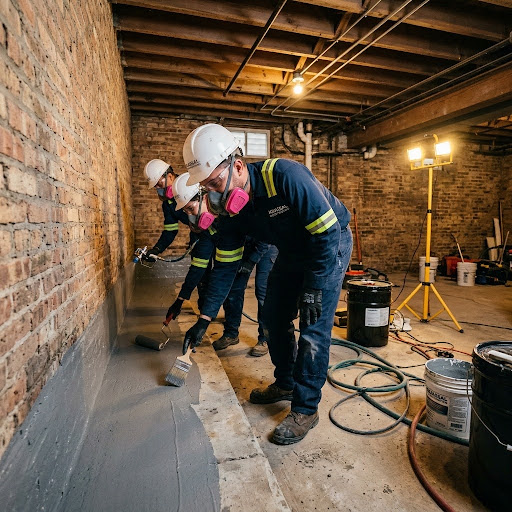
This isn’t a caulk-and-pray situation. Professional waterproofing is a multi-layered approach tailored to the specific conditions of your home, and basement waterproofing services delivered by experienced masonry professionals can protect your foundation from the inside out—adding structural integrity, improving air quality, and giving you usable, dry space that holds its value year after year.
Here’s what a comprehensive waterproofing solution typically includes:
Interior waterproofing systems involve installing drainage channels along the interior perimeter of your basement floor, directing water to a sump pump that removes it before it can cause damage. This is one of the most effective long-term solutions for homes with persistent water intrusion.
Exterior waterproofing addresses the problem at its source. Crews excavate around the foundation, apply waterproof membranes and coatings to the exterior walls, and install drainage board to redirect groundwater away from the structure. It’s more involved, but it stops water before it ever touches your foundation.
Crack injection uses polyurethane or epoxy to seal foundation cracks from the inside, preventing water from seeping through existing weak points in the concrete or block walls.
Sump pump installation and maintenance ensures that any water that does find its way in gets removed quickly and efficiently, protecting your basement even during heavy rainstorms.
The Real Cost of Doing Nothing
It’s tempting to put off basement waterproofing, especially when the water intrusion seems minor. But deferred maintenance in this area is one of the most expensive mistakes a homeowner can make.
Mold growth can begin within 24 to 48 hours of water exposure, according to the EPA. Once mold takes hold in a basement, remediation costs can run into the thousands—separate from any structural repairs. Beyond mold, persistent moisture weakens the structural integrity of your foundation over time, potentially compromising the entire home above it.
Then there’s the property value impact. A wet basement is a red flag for buyers and inspectors alike. A waterproofed basement, on the other hand, signals that the home has been well-maintained and is built to last.
How Basement Waterproofing Transforms Usable Space
A dry basement opens up possibilities that a damp one simply can’t. Homeowners who invest in waterproofing often go on to finish their basements—adding home offices, gyms, playrooms, or guest suites. That additional square footage can meaningfully increase a home’s market value and livability.
Even if you never finish the space, a waterproofed basement is simply more functional. Storage stays safe. HVAC equipment lasts longer without the corrosive effects of constant humidity. And you stop dreading every heavy rainstorm.
What Sets a Quality Masonry Contractor Apart
A skilled local masonry team brings the kind of hands-on expertise that makes a measurable difference. The right contractor doesn’t apply one-size-fits-all solutions, every project starts with a thorough assessment of the home’s specific water intrusion patterns, foundation type, and drainage conditions.
That diagnostic approach means the waterproofing system installed is the right one for your home, not just the quickest one to execute. From interior drainage systems to full exterior excavation and membrane application, a quality masonry team handles the entire process with precision and professionalism.
Their work is also built to endure. Masonry expertise isn’t just about waterproofing—it’s about understanding how structures behave over time, how materials interact with soil and water, and how to build solutions that hold up through decades of freeze-thaw cycles and seasonal groundwater fluctuations.
Is It Time to Take Your Basement Seriously?
If your basement shows any signs of moisture—dampness, efflorescence, cracks, musty odors, or visible water after rain—the answer is yes. And the sooner you act, the less damage you’re dealing with.
A damp basement doesn’t fix itself. Water finds the path of least resistance, and the longer it has to work on your foundation, the more complicated and costly the repair becomes. Getting ahead of the problem is always the better financial decision.
Frequently Asked Questions
How long does basement waterproofing take?
Most interior waterproofing projects can be completed in one to three days, depending on the size of the basement and the complexity of the system. Exterior waterproofing projects that require excavation typically take longer, often three to five days or more.
Will waterproofing permanently fix my wet basement?
A professionally installed waterproofing system significantly reduces the risk of water intrusion and, in most cases, eliminates it entirely. The longevity of the solution depends on the method used, the quality of installation, and regular maintenance of components like the sump pump.
Does basement waterproofing add value to my home?
Yes. A dry, waterproofed basement is a strong selling point and can directly improve a home’s appraised value. It also reduces the likelihood of costly inspection findings during a sale.
Can I waterproof a basement that already has mold?
Mold should be remediated before or alongside waterproofing to ensure the space is healthy and the new system isn’t trapping existing contamination. A professional assessment will determine the right sequence of steps.
What’s the difference between interior and exterior waterproofing?
Interior waterproofing manages water after it enters the foundation, directing it to a drainage system. Exterior waterproofing stops water before it reaches the foundation walls. The right approach depends on the severity of the issue, the home’s construction, and the surrounding drainage conditions.